Why choose a hotel in Dakar city center
Traffic on Avenue Georges Pompidou slows to a crawl at sunset, taxis edging past the sand-coloured façades while the Atlantic breeze cuts through the heat. Staying in Dakar city center places you right in this daily choreography, close to ministries, banks, and the main cultural institutions of Dakar Sénégal. For travellers who want the city rather than the beach club bubble, this is the most strategic base.
From a hotel in the heart of Dakar city, you can walk to the Plateau’s galleries, step into historic cafés, and reach the ferry terminal for Gorée Island in a short ride. Many of the best hotels Dakar offers in this area are located within a compact grid of streets, which means quick access to business meetings by day and to the Corniche at night. You feel the pulse of Dakar hotel life here : call to prayer at dawn, street vendors at noon, rooftop bars by evening.
This central district suits guests who value efficiency and urban energy over a pure beach escape. If you are comparing a hotel Dakar city center with an Almadies hotel on the coast, the trade-off is clear : city center equals proximity and cultural immersion, Almadies equals quieter nights and easier access to the beach. Many discerning guests enjoy combining both, starting with two or three nights in the Plateau before moving out towards the des Almadies area.
Atmosphere and urban landscape around the Plateau
Sandstone government buildings, low-rise offices, and palm-lined squares define the Plateau, the historic core of Dakar Sénégal. The city center is compact but layered : one street might be lined with embassies and banks, the next with tailors, bookshops, and small restaurants serving thiéboudienne at plastic tables. Choosing a Dakar hotel here means accepting a certain urban intensity, but also gaining a front-row view of daily life.
From many upper-floor rooms, the view alternates between the port’s cranes, the presidential quarter’s gardens, and the wide curve of the Dakar sea along the Corniche. You are not directly sur mer as in the pure beachfront districts, yet the Atlantic is rarely out of sight. Some properties offer rooftop terraces where guests enjoy long sunsets over the city, a glass in hand, watching the light fade behind the Île de Gorée silhouette.
Noise is part of the equation. Expect car horns, distant music, and the hum of the port, especially if your room faces a main avenue. If you are sensitive to sound, request a room oriented towards an inner courtyard or higher floors with more filtered views. The reward is an authentic sense of Dakar city rather than a sealed resort experience, with cafés, pharmacies, and small épiceries all within a few minutes’ walk.
What to expect from rooms, suites and apartments
Inside, standards vary from simple business rooms to polished suites that would not look out of place in any major African capital. In the upper tier, expect generous rooms with king beds, well-defined workspaces, and large windows framing either city views or partial sea views. Some properties also offer apartment-style units with kitchenettes, ideal if you plan a longer stay in Dakar Sénégal and want more autonomy.
Layout matters more than surface alone. A well-designed 25 m² room with good storage and a clear separation between sleeping and working areas will feel more comfortable than a larger but poorly organised space. When reading any reviews room descriptions, pay attention to mentions of natural light, blackout curtains, and air circulation, as these details shape your rest more than decorative touches. For families or small groups, interconnected rooms or a one-bedroom apartment can be more practical than squeezing into a single large room.
In the premium segment of hotels Dakar, bathrooms tend to be modern, with walk-in showers, quality fixtures, and clear water pressure. If a bathtub matters to you, verify this point before booking, as many city properties now prioritise showers. A few addresses also reserve their best rooms on higher floors, where the view over Dakar city opens up and the urban noise softens. Those top floors are often where guests enjoy the most convincing balance between comfort, privacy, and a sense of place.
Facilities: swimming pools, restaurants and urban comforts
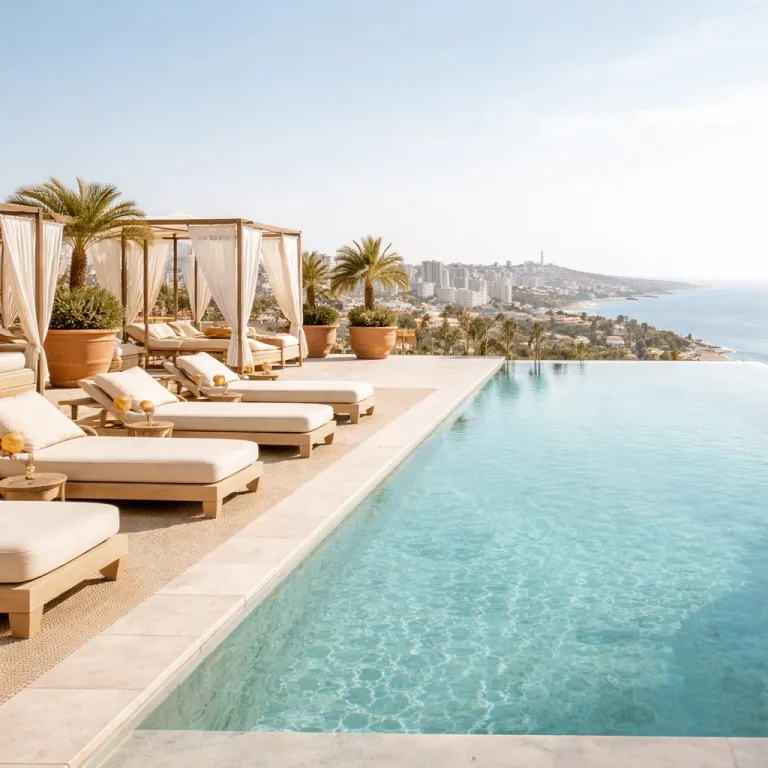
Not every hotel Dakar city center can offer a full resort set of facilities, simply because space is tighter than in coastal districts. Yet several central properties still manage to include a compact swimming pool, often on a terrace or in a sheltered courtyard. These pools are less about laps and more about cooling off after a day in the heat, a quiet interlude between meetings or museum visits. If a pool is essential to you, make it a non-negotiable filter when comparing options.
Restaurants in the city center tend to lean towards international and Senegalese classics rather than experimental cuisine. You will find grilled fish, yassa chicken, and well-executed breakfast buffets, sometimes with a view over the port or the city skyline. Some hotels also host a club-style bar or lounge where Dakar’s business crowd gathers in the early evening. This is where you feel the city’s professional rhythm : quick meetings, short drinks, then everyone disperses along the Corniche.
Well-equipped fitness rooms are increasingly common in higher stars properties, though sizes vary. A few addresses also offer small spas or massage cabins, more for a restorative treatment than a full wellness retreat. When you read any reviews hotel comments, look beyond the overall rating and focus on recurring mentions of noise levels, breakfast quality, and the state of common areas. These elements often reveal more about day-to-day comfort than the official stars classification.
City center versus Almadies and the coastal strip
Stand on the Corniche Ouest near the Sea Plaza mall and you feel the city stretching in two directions : the dense Plateau behind you, the more relaxed coastal districts leading towards des Almadies ahead. Choosing between Dakar city center and the Almadies area is less about better or worse, more about rhythm. The Plateau is for early meetings, quick access to institutions, and short transfers to the port. Almadies is for late dinners, beach clubs, and long afternoons by the ocean.
In Almadies, many hotels are directly sur mer or within a short walk of the beach, with terraces that open onto the waves. You trade the immediate access to ministries and corporate offices for easier access to surf spots and seaside restaurants. An Almadies hotel often feels more resort-like, with larger swimming pool areas and more outdoor space. The city center, by contrast, offers a denser urban fabric where you can step out of your lobby and be in the middle of Dakar’s everyday life within seconds.
For a first stay in Dakar Sénégal, a balanced itinerary works well. Spend a few nights in the Plateau to understand the city’s structure, visit museums, and handle any business commitments. Then move towards the coast, whether near the Corniche or further into des Almadies, to slow down and enjoy the beach and the Dakar sea. This two-step approach lets guests enjoy both the cultural and the coastal sides of the capital without long daily commutes.
How to choose the right Dakar city center hotel
Location within the Plateau matters more than many first-time visitors realise. A property located near Rue Carnot or Rue Colbert will place you within walking distance of several ministries, banks, and international organisations, which is ideal if your schedule is dense. Being closer to the Corniche Ouest shortens your transfers to coastal restaurants and to the Sea Plaza area, where many locals and travellers converge in the evening. Study the map carefully rather than relying only on a generic Dakar hotel address.
When comparing options, look at more than the overall rating. A slightly lower rating with consistently positive comments about cleanliness, staff attention, and quiet rooms can be a better choice than a higher score with frequent complaints about noise or maintenance. Pay attention to whether guests enjoy the breakfast, the comfort of the beds, and the efficiency of the front desk. These recurring themes in any reviews are often more telling than isolated praise or criticism.
Finally, match the property’s profile to your own travel style. Business travellers may prioritise fast check-in, reliable transfers, and a calm lobby over a large swimming pool or sea views. Leisure guests might prefer a hotel located closer to the Corniche, with a terrace where they can watch the city lights and the distant line of the Dakar sea. If you plan to explore both the Plateau and the coastal districts, choose a base with easy taxi access and clear directions for drivers, as this will save you time and small frustrations.
Is Dakar city center a good area to stay for first-time visitors ?
For a first stay, Dakar city center is an excellent base if you want to understand how the city works and move easily between business, culture, and the coast. You are close to institutions, museums, and the port, with quick taxi access to the Corniche and to more relaxed seaside districts. The atmosphere is busy and urban rather than resort-like, which suits travellers who enjoy being in the middle of things. If you prefer a quieter, beach-focused stay, you may want to combine a few nights in the Plateau with time in coastal areas such as Almadies.
What type of traveller benefits most from staying in the Plateau ?
The Plateau suits travellers with meetings in ministries, banks, or international organisations, as well as culture-focused visitors who plan to spend time in museums and galleries. It also works well for short stays, when you want to minimise transfers and have quick access to both the port and the Corniche. Nightlife here is more about restaurants and hotel bars than beach clubs, so it is ideal if you prefer an urban evening scene. Families seeking space and direct beach access may feel more comfortable in coastal districts.
How does staying in Dakar city center compare with staying near the beach ?
Staying in Dakar city center gives you immediate access to offices, administrative buildings, and many everyday services, but you are not directly on the beach. Coastal districts offer easier access to the ocean, larger outdoor areas, and a more resort-like atmosphere, yet they require longer transfers to reach the Plateau and the port. City center hotels are better for efficiency and cultural immersion, while beachside properties are better for relaxation and sea-focused activities. Many travellers choose to split their stay to enjoy both experiences.
Are there enough high-standard hotels in Dakar city center ?
Dakar city center concentrates a significant share of the higher-standard hotels in the capital, with a mix of established international-style properties and well-run local addresses. You will find a range of stars categories, from solid mid-range to more polished options with refined service and good facilities. The key is to compare not only the official category but also the consistency of maintenance, comfort of rooms, and quality of common areas. Reading detailed comments about cleanliness, noise, and staff attention will help you identify the most reliable choices.
Is it easy to move from Dakar city center to Almadies and other districts ?
From the Plateau, reaching Almadies or other coastal districts is straightforward by taxi, though travel times vary with traffic, especially at rush hour. The main roads along the Corniche connect the city center to the Sea Plaza area and then further out towards des Almadies. Many drivers know the central hotels and can navigate between districts without difficulty, but having your address written down helps. If you plan to move frequently between meetings in the Plateau and dinners by the sea, factor travel time into your daily schedule.
