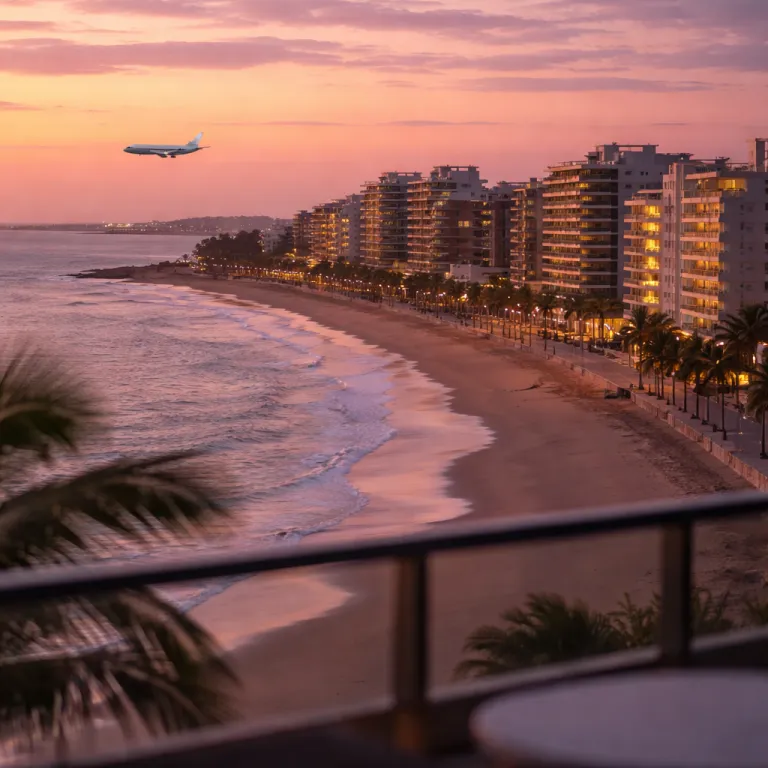
Non stop Montreal–Dakar access reshapes luxury demand
The launch of Air Transat’s nonstop Montreal–Dakar service is reshaping how Canadian travelers plan high end stays in Senegal. By removing the traditional European hub stop, this direct Montreal–Dakar flight trims the journey to roughly eight hours and turns a once fragmented trip into a same day arrival. For luxury guests who value time as much as design, that shorter flight from Montréal–Pierre Elliott Trudeau International Airport to Dakar’s Blaise Diagne hub (DSS) is a decisive factor when choosing both airline and hotel.
Air Transat positions itself as a leisure airline on this new corridor, with two flights per week on Wednesdays and Saturdays between Montréal and Dakar. These flights Montreal to Dakar operate during the northern summer, with the route scheduled across four months and two days a week that align neatly with long weekend escapes and extended coast stays. The airline uses Airbus A321neo long range aircraft, a narrow body jet whose quieter cabin and modern configuration suit premium leisure travelers more than dense business traffic on older routes across Africa.
For Senegal’s high end hotels, the impact of this route is not just extra capacity but the type of guest it attracts. Air Transat has framed the Montreal–Dakar connection as a bridge for the Senegalese diaspora and for North Americans seeking culture rich leisure in West Africa. As Chief Revenue Officer Sebastian Ponce states, this route “responds to a strong connection: that of the Senegalese diaspora in Quebec and travellers eager to discover Senegal's rich culture,” and that clear positioning signals that Dakar will see more family groups, solo explorers and couples booking premium rooms rather than purely corporate blocks.
This airline move also plugs Senegal more firmly into the global leisure airline map, where Skytrax airline rankings and airline awards shape perception of quality. While Air Transat is best known in Canada for sun routes, its push into Africa aligns with growing demand for flights Senegal bound that bypass Europe. For hotel revenue managers in Dakar, the fact that an airline voted best leisure carrier in several Skytrax airline categories in past years is less important than the predictable two flights per week that can be modeled into demand forecasts and weekly pick up reports.
From a traveler’s perspective, the new Montreal–Dakar flight means you can leave Montréal in the evening and wake up close to the Atlantic coast. That same day arrival compresses jet lag and allows check in at a luxury property in Almadies or Ngor before lunch, with hours day still available for a first walk along the beach. For hotels, this same pattern means earlier arrivals, more breakfast covers and a shift in staffing contact hours at the front desk and concierge.
From Almadies to Ngor: where Canadian demand will land first
The first wave of guests stepping off the Air Transat Montreal–Dakar flight will gravitate toward Dakar’s coastal districts. Almadies, Ngor and the Corniche Ouest already host many of the city’s best luxury and premium properties, and their proximity to the beach and to Dakar DSS transfer routes makes them natural winners. Expect these hotels to refine their positioning as the best leisure addresses for Canadians who want both ocean views and quick access to the Plateau for business meetings.
Because the leisure airline schedule concentrates flights Montreal to Dakar on two days a week, hoteliers can anticipate mini peaks in check in patterns. Wednesday arrivals will feed long weekend stays, while Saturday flights Senegal bound will support longer coast breaks that stretch over one or two weeks. Revenue teams will likely adjust minimum stay rules, with some properties near the coast offering three night packages that align with the flight Montreal schedule and the new rhythm of this route.
Language and service standards will matter as much as design for this new market segment. Properties that already operate with bilingual English French équipes and North American style amenities will be best placed to convert Air Transat guests into repeat clients over the coming years. In parallel, hotels tracking energy costs and rate strategy can look to analyses such as this piece on what oil price volatility means for Senegal’s high end hotel sector to understand how fuel sensitive airline routes might influence long term pricing.
For the Senegalese diaspora in Québec, the nonstop Montreal–Dakar service simplifies family trips that once required long layovers. Many of these travelers will choose comfortable mid to upper tier hotels near family homes rather than the most ostentatious suites, but their stays still lift occupancy in premium properties across Dakar. Early feedback from local operators suggests that bookings linked to the new flights have already extended average length of stay by one night and lifted shoulder season occupancy by several percentage points, smoothing demand across each week air rotation even when pure leisure demand softens.
Hotels that respond quickly with tailored content flights on their websites and in their booking engines will capture more of this new audience. Clear information in English about airport transfers from Dakar DSS, transparent contact centre details and responsive contact hours for Canadian time zones will all influence conversion. Some properties are already training reservation teams to handle calls routed via a Montréal based centre contact partner, ensuring that any potential guest who wants to contact the hotel after booking through Air Transat can do so without friction.
How direct connectivity reshapes Senegal’s wider luxury map
While Dakar will feel the immediate impact of the Air Transat Montreal–Dakar route, the ripple effects will extend along the Petite Côte and beyond. Once travelers have settled into a city hotel, many will push south toward Saly, Somone or even the more discreet stretches of coast near Popenguine, where luxury lodges blend beach life with refined Senegalese cuisine. This is where the new route’s time savings become tangible: an eight hour flight followed by a two hour drive still leaves enough hours day to swim before sunset.
For solo explorers and couples, the ability to fly Montreal–Dakar without a layover opens up more ambitious itineraries that combine city stays with inland or coastal escapes. A guest might spend three nights in a design forward property in Plateau, then move to a quiet retreat on the coast, guided by resources such as this visual journey through elegant stays and coastal light in Senegal. As these patterns repeat over months and years, luxury operators outside Dakar will start to track the days week when Air Transat flights arrive and time their check in and activity schedules accordingly.
The key takeaway for hoteliers is not just the existence of the route but how it reshapes guest expectations around food, wellness and cultural access. Canadian travelers arriving on the Montreal–Dakar flight are likely to seek both refined dining and authentic plates of thiéboudienne, a trend already explored in depth in our feature on how hotel chefs are reinventing Senegalese terroir. Properties that curate this balance, while maintaining clear contact channels and a responsive contact centre, will be best positioned to turn first time visitors into loyal guests.
From an industry perspective, this route underlines how airline strategy and hotel development in Africa are now tightly interlinked. When an airline like Air Transat adds a non stop leisure route, it signals confidence in Senegal’s stability, its coast infrastructure and its capacity to host higher spending visitors. For travelers reading this from Montréal or elsewhere in Canada, the message is simple: the Skytrax airline tables and airline awards matter, but what will shape your stay is how well your chosen hotel understands the new rhythm of this Montreal–Dakar corridor.
Practical notes for travelers using the new route
Air Transat’s official guidance is clear for anyone planning to use the Montreal–Dakar flight. The inaugural service is scheduled to start on June 17 with two flights per week between Montréal and Dakar, and the airline advises travelers to book early because demand from both leisure guests and the Senegalese diaspora is expected to be strong. The airline also reminds passengers to check entry formalities for Senegal and to secure hotel reservations in advance, especially for peak week air periods around Canadian holidays.
For any questions about flights Montreal to Dakar or schedule changes, travelers should consult the airline’s website or contact its customer service channels. While mysenegalstay.com is not a contact centre for Air Transat, we recommend that guests align their hotel check in and check out times with the published arrival and departure hours day of each flight Montreal to Dakar DSS. Doing so reduces unnecessary waiting time at the airport and allows you to move directly from the air conditioned cabin to your chosen property on the coast or in central Dakar.
As this route matures over the coming years, we will continue to monitor how hotel demand in Dakar and along the coast evolves. Our main content focus will remain on honest reviews of the best luxury and premium stays, from urban addresses suited to a short business day to coastal retreats ideal for longer leisure breaks. For now, the key takeaway is simple: a single non stop leisure airline route has redrawn the map between Montréal and Senegal, and the most agile hoteliers are already adjusting their strategies to meet you at arrivals.