How to choose where to stay on Senegal’s Petite Côte
Working out where to stay on Senegal’s Petite Côte starts with one question. Do you want the full seaside resort buzz of Saly Portudal or the softer rhythm of Somone’s lagoon and the small coast villages nearby? This stretch of shoreline south of Dakar is compact, but each place along the Petite Côte feels distinct and will shape your holidays very differently.
The Petite Côte is the country’s most established leisure corridor, running roughly 80 kilometres along the Atlantic coast from south Dakar down past Saly, Somone and Ngaparou towards the Saloum Delta. You move quickly from long crescents of sand and polished resort complexes to low key fishing villages where the beach is still shared between pirogues, children playing football and travellers nursing a café Touba at the water’s edge. Understanding this geography is the key to choosing the best base for your travel style and the kind of day you want to live here.
For business travellers extending a stay in Dakar, the Petite Côte offers a clean break from the city while remaining logistically simple. The drive from central Dakar or from the newer Blaise Diagne International Airport to Saly or Somone usually takes around one to two hours in normal conditions, depending on traffic when you are heading south from Dakar or returning north. That makes it realistic to finish meetings in the capital, check out of a hotel such as the Novotel Dakar on the Atlantic waterfront, and be walking barefoot on the sand before sunset.
Understanding the zones along the coast
Think of the Petite Côte as a sequence of zones rather than a single beach. Saly Portudal is the main resort hub, Somone and its lagoon form a quieter pocket, Ngaparou and nearby villages offer immersion, while Popenguine and Pointe Sarène sit at the edges with more niche appeal. Each zone along this coast has its own balance of beaches, local life, resort infrastructure and access to nature.
Saly and Somone sit in the Thiès region, which has become the engine of Senegal’s coastal tourism, with close to twenty hotels in Saly alone and consistently high occupancy levels according to local tourism board briefings and regional hospitality surveys. That density means choice, from all inclusive complexes to more intimate addresses, but it also means you need a clear travel guide style framework to avoid decision fatigue. Further south, towards the Saloum Delta and the wider Sine Saloum area, the coast becomes wilder, the sand feels less manicured and the days slow down, which suits travellers who value space over amenities.
When readers ask where to stay on Senegal’s Petite Côte, I usually start by mapping their priorities. If you want structured activities, reliable Wi Fi and a resort where the concierge can arrange water sports or a driver to Joal-Fadiouth at short notice, Saly Portudal is the obvious choice. If you prefer to wake to birds over the Somone Lagoon, walk to a local café and share thiéboudienne with neighbours rather than eat at a buffet, then Somone, Ngaparou or even Toubab Dialao on the small coast closer to south Dakar will feel more aligned.
Saly Portudal and Saly: the resort strip with everything on tap
Saly Portudal is where Senegal’s Petite Côte first embraced the resort model, and it still feels like the main stage. The town and its beaches welcome large numbers of visitors each year, many on package holidays from Europe, which means you will find groomed sand, a dense strip of hotels and a full menu of day trips. For travellers who want convenience and a familiar seaside resort rhythm, this is the best place to start.
On the ground, Saly and Saly Portudal blend into one continuous resort zone, with palm lined avenues leading down to the beach and a mix of international and local brands. Hôtel Royal Saly sits right on the sand with a classic resort layout, while The Rhino Resort Hotel & Spa offers a more enclosed, spa focused experience that suits business leisure guests who want to decompress after meetings in Dakar. Les Flamboyants Saly and other long running properties anchor the mid range, and the presence of all these resorts side by side gives the coast here a distinctly curated feel compared with the more scattered hotels further along the Petite Côte.
Service levels in Saly are generally high by Senegal standards, helped by the fact that many teams have been working in hospitality for years and understand international expectations. You can arrange water sports directly from the beach, book a car to Joal-Fadiouth or to the Somone Lagoon, or plan a full day loop that takes in Toubab Dialao on the small coast and back to your resort before dinner. For travellers who like to research online, this is also the area where you will find the most reviews and social media content, from instagram and Twitter posts about sunset cocktails to detailed travel guide style breakdowns of each seaside resort.
Who Saly works best for
If you are travelling with children or in a multi generational group, Saly Portudal is usually the safest bet. The beaches are wide, the sand is soft, and the concentration of resorts means you can walk between places for a change of scene without needing a car. Families appreciate the all inclusive options, while executives extending a work trip value the ability to schedule meetings in Dakar and still be back on the coast in time for a late swim.
For travellers who care about wellness and spa facilities, The Rhino Resort Hotel & Spa stands out as one of the most polished addresses on the Petite Côte. Its design is more enclosed than the classic seaside resort layout, which suits guests who want privacy and a controlled environment rather than a constant flow of beach vendors and day visitors. If you prefer a more open, village like feel, Hôtel Royal Saly and Les Flamboyants Saly place you closer to the local streets, where you can step out for grilled fish, live music and a more spontaneous connection with Senegalese daily life.
One practical note for readers planning where to stay on Senegal’s Petite Côte for peak season. Saly’s most sought after properties, including Hôtel Royal Saly and The Rhino Resort Hotel & Spa, often run close to full during school holidays, so booking early is essential if your dates are fixed. As a rule of thumb, securing your room two to four months ahead for Christmas, New Year or European spring breaks gives you more choice on room categories and price bands.
Linking city and coast
Many readers will pair a stay in Saly with a night or two in Dakar, especially if they are flying in for meetings or events. In that case, it makes sense to choose a business friendly hotel in the capital, such as the Novotel Dakar on the Atlantic waterfront, before transferring down the coast. Reading a detailed review of Novotel Dakar for refined stays on the Atlantic waterfront helps you understand how the city and coast experiences complement each other and what to expect in terms of service and facilities.
The road from Dakar to Saly has improved significantly, but traffic leaving the capital can still be dense, especially when you are heading south from Dakar on a Friday afternoon. Plan your transfer outside peak hours if possible, or consider travelling directly from Blaise Diagne International Airport to the coast to avoid backtracking. Either way, the contrast between the capital’s energy and the slower rhythm of the Petite Côte makes the journey feel worthwhile the moment you step onto the sand.
For travellers who like to share their journeys, Saly’s resort strip is also the most photogenic in a classic sense, with long lines of palms, colourful pirogues and sunsets that seem designed for instagram and Twitter. That may sound superficial, but it reflects a deeper truth about this part of Senegal. The coast here has been shaped by tourism for decades, and while that brings crowds, it also brings a level of polish and reliability that many readers quietly value.
Somone and the Somone Lagoon: quiet luxury on the small coast
Ten to fifteen minutes’ drive south of Saly, Somone feels like a different world. The main road drops towards the sea, the buildings stay low, and suddenly the soundtrack is birds over the Somone Lagoon rather than poolside playlists. For travellers asking where to stay on Senegal’s Petite Côte when they want calm without isolation, this small coast village is often the best answer.
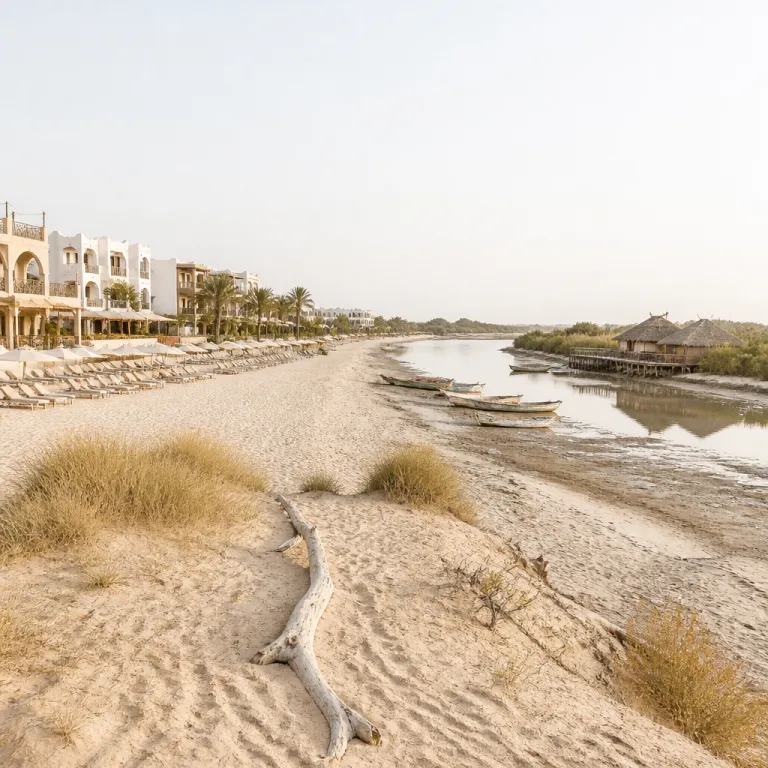
Somone’s defining feature is its protected lagoon, a shallow estuary where mangroves, sandbanks and calm water create a natural amphitheatre for birdlife and low impact water sports. Kayaks and pirogue trips glide past egrets and pelicans, and at low tide you can walk across the sand to small islets that feel far from the resort energy up the coast. The Somone Lagoon reserve gives this part of the Petite Côte a subtle eco tourism edge, which appeals to travellers who want their holidays to support conservation as well as comfort.
Accommodation here is more spread out than in Saly, with a mix of established resorts and smaller properties. Royal Horizon Baobab is the headline all inclusive resort in Somone, set on a generous stretch of beach with views back towards Saly and south Dakar on a clear day. Aerys Village and other local hotels sit slightly inland or along quieter sections of the coast, offering a softer, more residential feel that suits guests who prefer to walk to the beach rather than sleep directly above the waves.
Who Somone works best for
Somone is ideal for couples, solo travellers and small groups who value space and nature over nightlife. You can spend a day moving between the beach, the lagoon and simple local restaurants, then fall asleep to the sound of the ocean rather than late night bars. For executives extending a work trip, Somone offers enough connectivity to stay in touch with Dakar while feeling genuinely off duty.
Royal Horizon Baobab is particularly strong for guests who like the structure of an all inclusive resort but do not want to be in the thick of Saly’s strip. The property’s layout gives you direct access to the beach while keeping the main pools and restaurants slightly elevated, which preserves views along the coast and creates a sense of separation from day visitors. Industry FAQs confirm that Royal Horizon Baobab offers all inclusive packages, which simplifies budgeting and appeals to travellers who prefer fixed costs.
For travellers who prefer a more independent rhythm, smaller hotels such as Aerys Village and other local addresses in Somone allow you to build your own routine. You might start the day with a walk along the sand towards Ngaparou, spend the afternoon on the Somone Lagoon, then take a taxi up to Saly Portudal for dinner if you feel like a change of scene. That flexibility is what makes this part of the Petite Côte so appealing for longer stays and for travellers who return to Senegal year after year.
Planning around seasons and transfers
Weather along the Petite Côte is generally kind to travellers, with warm, dry months that suit beach holidays and slightly more humid periods when the coast still feels pleasant thanks to the Atlantic breeze. Somone’s lagoon can feel particularly magical in the softer light outside peak heat, so consider early morning or late afternoon excursions rather than the middle of the day. If you are planning a stay during the busiest months, look at typical booking patterns for July and August or for the Christmas period and aim to reserve your preferred room type several months in advance.
Transfers between Dakar, Saly and Somone are straightforward, but timing matters. Leaving the capital or the airport early in the day reduces the risk of traffic, and many hotels can arrange private cars that make the journey of roughly ninety minutes feel seamless. Once you arrive, you will quickly see why so many travellers choose to split their time between the resort energy of Saly and the quieter, lagoon focused rhythm of Somone.
For readers who like to combine work and leisure, Somone also offers enough infrastructure to stay productive when needed. Mobile coverage is solid, many properties now understand the needs of remote workers, and the slower pace can actually sharpen focus. When you close the laptop and step out to the beach, the contrast with your day in Dakar or your previous nights in a city hotel feels particularly sharp.
Ngaparou, Popenguine and Toubab Dialao: immersion along the small coast
Move a little further along the Petite Côte and the mood shifts again. Ngaparou, Popenguine and Toubab Dialao sit between the polished resort strip and the wilder Saloum Delta, offering a more immersive take on Senegal’s coast. These places suit travellers who want to feel part of a community rather than guests in a self contained seaside resort.
Ngaparou has grown from a fishing village into an emerging base for long stay visitors and remote workers, with guesthouses and small hotels tucked between local homes. The beach here is still shared with working pirogues, and the sand feels more lived in than manicured, which many readers find more authentic than the carefully raked beaches of Saly Portudal. You can walk to small restaurants, buy fruit from roadside stalls and quickly build relationships with local residents, which deepens your sense of being in Senegal rather than in a generic resort bubble.
Popenguine, a little further along the coast, is best known within Senegal for its religious pilgrimage and its dramatic cliffs. Accommodation is more limited, but that scarcity is part of the appeal for travellers who want a quieter base on the Petite Côte. The beaches here are framed by rock rather than endless sand, and the sense of being at the edge of the small coast rather than in its commercial heart is strong.
Toubab Dialao and the creative edge of the coast
Closer to south Dakar, Toubab Dialao has developed a reputation as a creative enclave, with art centres, music venues and small hotels perched on cliffs above the sea. The village sits technically on the same broader coast as Saly and Somone, but the experience is different enough that many travellers treat it as a separate chapter in their travel guide to Senegal. Days here are less about classic beach holidays and more about workshops, performances and conversations with artists.
The beach at Toubab Dialao is narrower than the wide stretches of sand further down the Petite Côte, but the setting between cliffs gives it a theatrical quality. You can swim, watch local kids play football at sunset and feel the Atlantic’s energy more directly than on the sheltered beaches of Somone Lagoon. For travellers who want to post something different on instagram and Twitter than another palm lined resort shot, this part of the small coast offers a more textured visual story.
Accommodation in Toubab Dialao and Popenguine tends to be smaller scale, with a mix of guesthouses and modest hotels rather than large resorts. That means fewer on site water sports or structured activities, but it also means more direct contact with local hosts and a stronger sense of place. If you are asking where to stay on Senegal’s Petite Côte and you value immersion over amenities, these villages deserve serious consideration.
Day trips and regional connections
One of the advantages of basing yourself in Ngaparou, Popenguine or Toubab Dialao is the ease of day trips along the coast. You can head north towards Dakar for meetings or cultural visits, then return to your quieter base by evening, or drive south towards Saly, Somone and even the Saloum Delta for excursions. This flexibility makes the region particularly attractive for travellers who like to keep their options open.
From Ngaparou, it is easy to arrange a car to Joal-Fadiouth, the twin settlement where a mainland fishing town connects by wooden bridge to an island built largely from shells. Many travellers visit Joal-Fadiouth and the neighbouring mainland quarter in a single day, combining history, religion and coastal scenery in one loop. You can also continue towards the wider Sine Saloum area if you want to taste the mangrove rich landscapes that define the Saloum Delta without committing to a full multi day detour.
For readers who like to plan in detail, basing yourself in one of these villages and using a structured travel guide to map out day trips can be rewarding. You will experience multiple facets of Senegal’s coast, from resort beaches to working ports and protected wetlands, while returning each night to a familiar place. That balance between movement and rootedness is one of the quiet luxuries of travelling this part of West Africa.
Pointe Sarène and the road towards Sine Saloum and the Saloum Delta
South of Saly and Somone, the Petite Côte begins to thin out before merging into the broader Sine Saloum and Saloum Delta region. Pointe Sarène sits at this transition point, a stretch of coast that is still largely undeveloped but already on the radar of early adopter travellers and hotel brands. If you are asking where to stay on Senegal’s Petite Côte and you like to be ahead of the curve, this area deserves a close look.
At the moment, Pointe Sarène offers a limited number of places to stay, with a focus on low rise properties that sit back from the beach. The sand here feels wide and open, and on many days you will share it with more fishermen than tourists, which is increasingly rare along this coast. The sense of space is striking, especially if you are arriving from the denser resort strip around Saly Portudal.
Looking ahead, the area is set to change, with large projects such as the PALMERA Hotel and other announced developments expected to bring hundreds of rooms and a more classic seaside resort profile. For now, though, Pointe Sarène remains a frontier for travellers who value quiet, long walks on the beach and the feeling of being at the edge of the developed Petite Côte. It is also a useful base if you plan to continue south towards the Sine Saloum region and the heart of the Saloum Delta.
Linking the Petite Côte with Sine Saloum
Many travellers underestimate how close the Petite Côte is to the mangrove rich landscapes of Sine Saloum. From Pointe Sarène or even from Saly and Somone, you can arrange a day trip or an overnight excursion into the Saloum Delta, where saltwater channels, islands and birdlife create a very different coastal experience. This combination of open Atlantic beaches and sheltered delta waterways is one of Senegal’s strongest cards for travellers who like varied holidays.
From a practical perspective, basing yourself on the Petite Côte and visiting Sine Saloum as an excursion can be more efficient than moving hotels every night. You keep the comfort and service levels of a resort or well run hotel on the coast, while still accessing the delta’s nature and culture. For readers who are used to hopping between islands in places like Cape Verde, this pattern of combining coast and delta will feel familiar, but the textures and rhythms here are distinctly Senegalese.
When planning this kind of itinerary, it helps to work with local operators who understand both the Petite Côte and the Saloum Delta. They can advise on tides, travel times and the best days for birdwatching or village visits, ensuring that your day in the delta complements rather than duplicates your time on the open coast. This is where a detailed travel guide or a specialist platform focused on Senegal can add real value beyond generic search results.
Who Pointe Sarène suits today
Right now, Pointe Sarène is best suited to travellers who are comfortable with a degree of uncertainty and who value landscape over nightlife. You come here for long walks on near empty beaches, for the sense of being at the edge of the developed Petite Côte, and for the ease of continuing south into Sine Saloum. If you need multiple restaurant options, structured kids’ clubs and a full slate of water sports on your doorstep, Saly or Somone will serve you better.
For executives extending a work trip, Pointe Sarène can work as a digital detox chapter after more connected days in Dakar or Saly. Mobile coverage is improving but still patchy in places, which can be a feature rather than a bug if you want to step away from constant notifications. When you do go online, you will probably find yourself sharing more reflective posts about the coast and the sky than about resort amenities, which says a lot about the mood here.
As development progresses, the balance between quiet and infrastructure will shift, so this is an area to watch if you plan to return to Senegal regularly. For now, though, Pointe Sarène offers a rare combination of accessibility and emptiness on a coast that is otherwise increasingly structured around resorts and established villages. That makes it one of the most intriguing answers to the question of where to stay on Senegal’s Petite Côte if you value horizon over crowds.
Joal Fadiouth, Exotic Park and family friendly days from the Petite Côte
Even if you base yourself firmly in Saly, Somone or Ngaparou, the wider Petite Côte offers a series of day trips that can reshape your sense of Senegal. Joal-Fadiouth, Exotic Park and the fringes of the Saloum Delta are all within reach, turning a simple beach holiday into a more layered journey. These excursions are particularly valuable for families and for travellers who like to understand the places behind the postcards.
Joal-Fadiouth is one of the most distinctive settlements on the coast, a twin town where Joal sits on the mainland and Fadiouth occupies an island built largely from shells. A wooden bridge links the two, and walking across it gives you a slow, elevated view of the water, the pirogues and the sandbanks that define this part of the region. Many travellers visit both Joal-Fadiouth and the neighbouring mainland quarter in a single day, combining church and mosque visits with time in the market and along the shore.
Exotic Park, closer to Saly and Somone, offers a different kind of outing, with animal enclosures and activities that appeal to children and to adults who want a break from the beach. It is not a substitute for a full safari, but it does add variety to a week on the coast, especially if younger travellers start to tire of sand and water sports. Combined with a stop in a local village or a sunset drink back at your seaside resort, it can turn an ordinary day into something more memorable.
Designing family friendly itineraries
For families asking where to stay on Senegal’s Petite Côte, the answer often lies in how you plan to use your days. A base in Saly Portudal gives you easy access to Joal-Fadiouth, Exotic Park and the Somone Lagoon, all within comfortable driving distance for children. Somone itself works well if you want quieter evenings and more nature, with the option to head up to the resort strip when you need more structured entertainment.
Many resorts and hotels can arrange private cars and guides for these excursions, which takes the pressure off parents who do not want to negotiate every detail on the spot. You can leave after breakfast, spend the day exploring Joal-Fadiouth or the fringes of the Saloum Delta, then be back on the beach in time for a late swim. This pattern of alternating active days with slower ones on the sand helps keep energy levels balanced and makes longer stays on the Petite Côte feel more sustainable.
For older children and teenagers, adding a cultural day in Dakar at the start or end of the trip can also be rewarding. You might spend a day visiting museums, markets and the island of Gorée, then transfer down the coast to Saly or Somone for the beach chapter of the journey. Planning this kind of combined city and coast itinerary is easier if you use a structured travel guide or a specialist platform that understands both sides of Senegal’s tourism offer.
Balancing relaxation and exploration
One of the strengths of the Petite Côte is how easily you can move between pure relaxation and deeper exploration. You can spend a morning doing nothing more than walking along the sand outside your resort, then head out after lunch to visit a local market or a village like Joal-Fadiouth. This rhythm keeps the holidays feeling rich without exhausting you.
For travellers who like to share their journeys online, these excursions also add texture to the story you tell on instagram and Twitter. Instead of a week of identical beach shots, your feed will show a mix of lagoon scenes, shell islands, village streets and resort sunsets, which better reflects the diversity of this coast. More importantly, those varied days will give you a deeper sense of Senegal beyond the hotel gates.
When you look back on your time on the Petite Côte, it is often these off resort days that stand out. The walk across the bridge to Fadiouth, the first sight of pelicans lifting off the Somone Lagoon, the conversations with local guides who explain how the coast has changed over time. Choosing where to stay on Senegal’s Petite Côte is partly about beaches and rooms, but it is also about positioning yourself to access these experiences with ease.
Practical decision framework: matching zones to your travel style
By now, the question of where to stay on Senegal’s Petite Côte should feel less abstract. You have Saly Portudal and Saly as the high energy resort strip, Somone and the Somone Lagoon as the quieter, nature focused pocket, Ngaparou, Popenguine and Toubab Dialao as immersion villages along the small coast, and Pointe Sarène as the frontier towards Sine Saloum and the Saloum Delta. The final step is to match these zones to your own travel style and priorities.
If you want maximum convenience, structured activities and a classic seaside resort atmosphere, choose Saly Portudal or central Saly. You will have multiple beaches within walking distance, a wide choice of restaurants and bars, and easy access to day trips such as Exotic Park and Joal-Fadiouth. This is also the best base if you are travelling with a group that includes different ages and interests, because the density of options along the coast makes it easier to keep everyone happy.
For travellers who value calm, nature and a slightly more local feel, Somone and Ngaparou are stronger choices. Somone gives you the lagoon, the option of an all inclusive stay at Royal Horizon Baobab and a softer village rhythm, while Ngaparou offers more immersion and a growing community of long stay visitors. Both still sit close enough to Saly that you can dip into the resort energy when you want it, then retreat to quieter beaches and streets by night.
Combining city and coast
Many readers will be flying into Dakar for work or connecting through the capital on their way to the Petite Côte. In that case, it makes sense to think of your stay as a two or three chapter journey, with time in Dakar, time on the coast and possibly a short extension into Sine Saloum. Planning ahead is crucial, especially around major events when hotel demand in the region spikes.
For example, the Youth Olympic Games in Dakar are expected to bring a significant influx of visitors to the capital and the surrounding coast. If your travel dates overlap with major events, consult an up to date hotel booking guide for the Dakar Youth Olympics or similar resources that explain where to book before large numbers of visitors arrive. The same logic applies to peak holiday periods on the Petite Côte, when occupancy rates in places like Hôtel Royal Saly and Royal Horizon Baobab climb well above the annual average.
When you combine city and coast, think about the order that best suits your energy. Some travellers prefer to start with Dakar, using a business friendly hotel as a base before unwinding on the Petite Côte, while others like to arrive to the beach first, reset their body clock and then tackle the capital. Either way, the relatively short distance between Dakar and the coast makes it easy to design a trip that feels coherent rather than fragmented.
Final filters: service, connectivity and personal rhythm
As you narrow down where to stay on Senegal’s Petite Côte, apply a few final filters. If you need strong Wi Fi and meeting friendly spaces, focus on established resorts in Saly or on well reviewed hotels in Somone that explicitly cater to business leisure travellers. If you are more interested in local interaction and slower days, look to Ngaparou, Popenguine or Toubab Dialao, where the line between guest and neighbour is thinner.
Think also about how you like to structure your days on holiday. If you enjoy a full programme of water sports, spa treatments and organised excursions, a larger seaside resort will give you more options without constant planning. If you prefer to wake without an agenda, walk along the sand, talk to local residents and let the day unfold, a smaller property in a village setting will suit you better.
Finally, remember that the Petite Côte is compact enough that you do not have to choose just one answer to the question of where to stay. A few nights in Saly Portudal, followed by time in Somone and a final chapter in Ngaparou or Pointe Sarène, will show you multiple faces of Senegal’s coast in a single trip. That layered experience is what keeps many travellers returning to this region long after their first holidays here.
Key figures for stays on Senegal’s Petite Côte
- The Saly area currently hosts close to 20 hotels, according to local tourism board figures and regional hospitality surveys, making it the densest accommodation hub on the Petite Côte and the most practical base for travellers who prioritise choice.
- Average hotel occupancy in Saly is often reported at around three quarters full over the year in industry briefings, which means peak holiday periods typically see significantly higher rates and justify booking well in advance.
- Driving time from central Dakar or from Blaise Diagne International Airport to Saly or Somone typically ranges from about 60 to 120 minutes in normal traffic, making the Petite Côte one of the most accessible coastal regions in West Africa for short breaks.
- Royal Horizon Baobab in Somone is one of the few fully all inclusive resorts on this stretch of coast, a fact highlighted in hotel FAQs and useful for travellers who prefer fixed budgets and structured stays.
- The Petite Côte corridor from south Dakar to the fringes of the Saloum Delta spans roughly 80 kilometres of coastline, allowing travellers to experience multiple distinct zones without long overland journeys.
FAQ about where to stay on Senegal’s Petite Côte
What are the top rated hotels in Saly for premium stays ?
In Saly, Hôtel Royal Saly and The Rhino Resort Hotel & Spa consistently rank among the top rated options for travellers seeking premium stays. Hôtel Royal Saly offers a classic beachfront resort experience with easy access to the town’s amenities and beaches. The Rhino Resort Hotel & Spa focuses more on wellness and privacy, with a strong spa offering that appeals to business leisure guests and couples.
Are there all inclusive resorts in Somone on the Petite Côte ?
Yes, Somone does offer all inclusive options on the Petite Côte. Royal Horizon Baobab is the best known all inclusive resort in Somone, combining direct beach access with structured activities and dining. This makes it particularly attractive for families and travellers who prefer to manage their budget upfront while still enjoying a high level of comfort.
How far is the Petite Côte from Dakar and the international airport ?
The main hubs of the Petite Côte, including Saly and Somone, are roughly 60 to 80 kilometres from Dakar and even closer to Blaise Diagne International Airport. In practice, the drive usually takes between one and two hours, depending on traffic and your exact starting point in the city. This proximity allows travellers to combine time in the capital with beach holidays without long transfers.
Which area on the Petite Côte is best for quiet stays ?
For quieter stays, Somone, Ngaparou and Popenguine generally work better than central Saly. Somone offers the added benefit of the protected Somone Lagoon and a softer village atmosphere, while Ngaparou and Popenguine provide more immersion in local life and fewer large resorts. Pointe Sarène is also an option for travellers who prioritise space and emptier beaches over nightlife and amenities.
Is it easy to organise day trips from the Petite Côte to other regions ?
Organising day trips from the Petite Côte is straightforward, especially from Saly and Somone where many hotels work with local drivers and guides. Popular excursions include visits to Joal-Fadiouth, Exotic Park and the fringes of the Saloum Delta, all reachable within a day. Travellers can also plan cultural days in Dakar, using the coast as a relaxing base between city visits.