Palmera Hotel Pointe Sarène Senegal reshapes luxury on the Petite Côte
Palmera hotel Pointe Sarène Senegal reshapes luxury on the Petite Côte
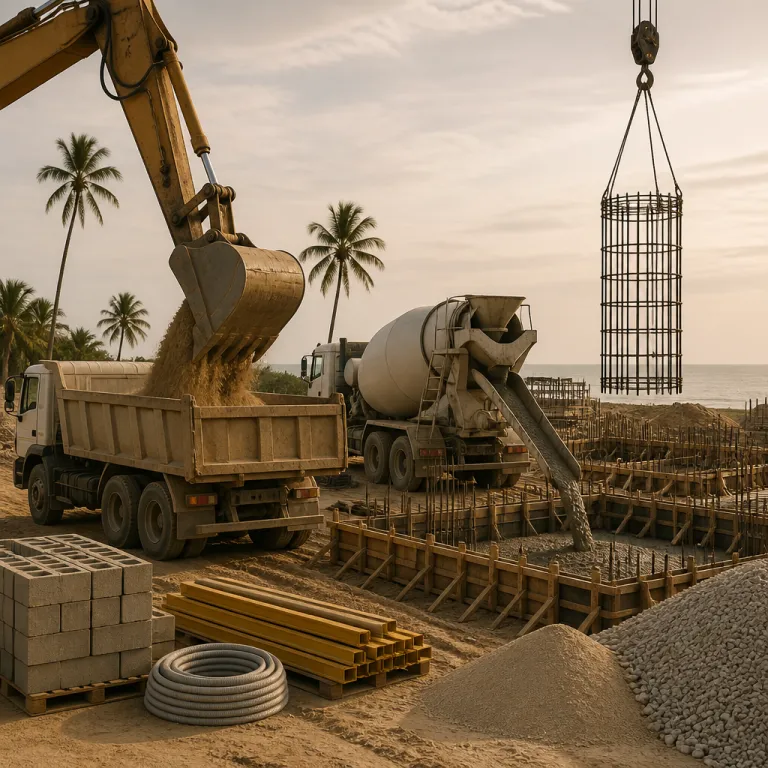
Palmera Hotel Pointe Sarène Senegal is being positioned as a coastal flagship for fully Senegalese financed luxury hospitality. On May 4, President Bassirou Diomaye Faye presided over the groundbreaking of this five star hotel in Pointe Sarène, a quiet stretch of the Mbour coastline about 22 km south of Saly, marking a major shift in how the country funds high end tourism projects. According to a joint communiqué from SAPCO Sénégal and Dall Bi SA released at the ceremony, the event brought together national authorities, SAPCO Sénégal as land developer, and Dall Bi SA, the project developer backed by the Mutuelle des Douanes sénégalaises, underlining that the capital for this hotel comes entirely from within the country and that construction is scheduled in phases through 2026.
The investment behind the resort is estimated at 16 billion FCFA, roughly 26 million USD, for a property that will offer 253 rooms and suites, including a presidential suite and a 1 000 m² conference center. This scale makes the project one of the most ambitious on the Petite Côte, and it signals to international travelers that Senegal is ready to host larger meetings, incentives and leisure groups without relying on foreign chains to lead the experience. For people used to reading about African hospitality in the New York Times or other international media, the fact that this hotel is financed by Senegalese institutions rather than a foreign city based conglomerate is a story of economic growth and control that would not feel out of place in a major business feature or a detailed country investment report.
The architecture of the Pointe Sarène resort is inspired by the form of a palm tree, with horizontal branches stretching along the beachfront to maximize ocean views while limiting visual impact on the coast. This bioclimatic approach will integrate solar energy and careful water management, which is not just an environmental gesture but a practical response to the realities of building a large hotel in a coastal area where resources must be managed over long times. For couples planning a romantic stay, that design means more rooms facing the Atlantic, quieter corners away from the main pool, and an experience that keeps the beach at the heart of daily life rather than hidden behind a wall of concrete. A local guide in Pointe Sarène summed it up simply during the launch: “People want comfort, but they also want to feel the ocean is still the real heart of this place, not just a backdrop for an exceptional postcard.”

What a fully Senegalese funded flagship means for travelers
For Senegal’s tourism authorities, the Palmera Hotel project is about more than a new place to sleep; it is a statement about who owns the future of the country’s coastline. The official dataset describes the significance clearly in one line: "What is the significance of the Palmera Hotel project?" and the answer follows without hesitation: "It marks a milestone in Senegal's luxury tourism development." When you book into a hotel like this once it opens, you are stepping into a property where the financial returns, the management jobs and the long term opportunities are designed to circulate within the country rather than flow out to an international headquarters in another city.
Developers expect more than 400 direct jobs and over 1 200 indirect jobs to be created around Palmera, from front office roles to water sports instructors and local suppliers, which will anchor the resort in the daily life of Pointe Sarène. That employment base matters for travelers who care about where their money goes, because each job supports a family, a son or daughter in school, and a network of small businesses that benefit from the hotel’s presence. In the same communiqué, Dall Bi SA emphasized that training programs will target young people from nearby communities so that the first wave of recruits can grow into supervisory roles over time. A municipal councilor quoted in local press noted that “for the first time, our sons and daughters see a major project on this beach where they can build a career without leaving for another city,” a reminder that tourism growth is also about long term social stability.
This fully Senegalese capital structure also changes how the project will be judged by local media and by international observers who usually focus on foreign brands. Instead of a distant board in New York or another major financial center, the key decisions sit with Dall Bi SA and the Mutuelle des Douanes sénégalaises, whose reputations are tied to long term performance rather than a quick exit. For people who follow hospitality news as closely as they read the New York Times travel pages, this is a rare case where the flagship coastal resort and the financial engine behind it share the same national identity, which should translate into a more grounded, teranga driven guest experience that feels exceptional without losing its roots.
Pointe Sarène’s beachfront future and how couples can plan around it
Pointe Sarène has long been a quieter alternative to Saly, but the arrival of Palmera Hotel Pointe Sarène Senegal will accelerate its transformation into a high end beachfront corridor. SAPCO Sénégal’s role in structuring the land around the project suggests that more hospitality developments will follow, though Palmera is clearly intended as the exceptional flagship that sets the tone for service standards and environmental integration. For couples who prefer a slower rhythm than the nightlife of Dakar’s Almadies, this stretch of sand offers a chance to wake up within meters of the Atlantic while still being within a few hours’ drive of the capital city and its cultural life.
Once open, the new five star hotel will sit on five hectares with around 24 000 m² of built space, including a spa, a water sports base and that large conference center, which means the property will host both leisure guests and corporate groups at different times of the year. That mix can work in your favor; if you time your stay outside major conference dates, you will find more space at the pool, easier restaurant reservations and staff whose job is to focus entirely on your stay. Our wider guide to the best hotels for refined stays along the Atlantic coast already highlights how properties from Dakar to the Sine Saloum are learning to balance international expectations with local character, and Palmera is set to join that short list as travelers discover a new hub for meetings and romantic escapes.
For travelers mapping out a longer Senegal itinerary, it makes sense to think of Palmera as one stop in a coastal project that links Dakar’s creative quarters, the Petite Côte and the delta landscapes further south. You might spend a few nights in the capital, using our neighborhood guide to Dakar’s emerging hotel districts to choose an address in the heart of the city, then head down to Pointe Sarène for uninterrupted beach time. That combination gives people the best of both worlds: the energy of a growing West African metropolis that sometimes feels as dense as parts of New York, and the calmer, tres relaxed beachfront where the main agenda will be swimming, tasting thiéboudienne and watching the slow growth of a new luxury hub funded on Senegalese terms.
