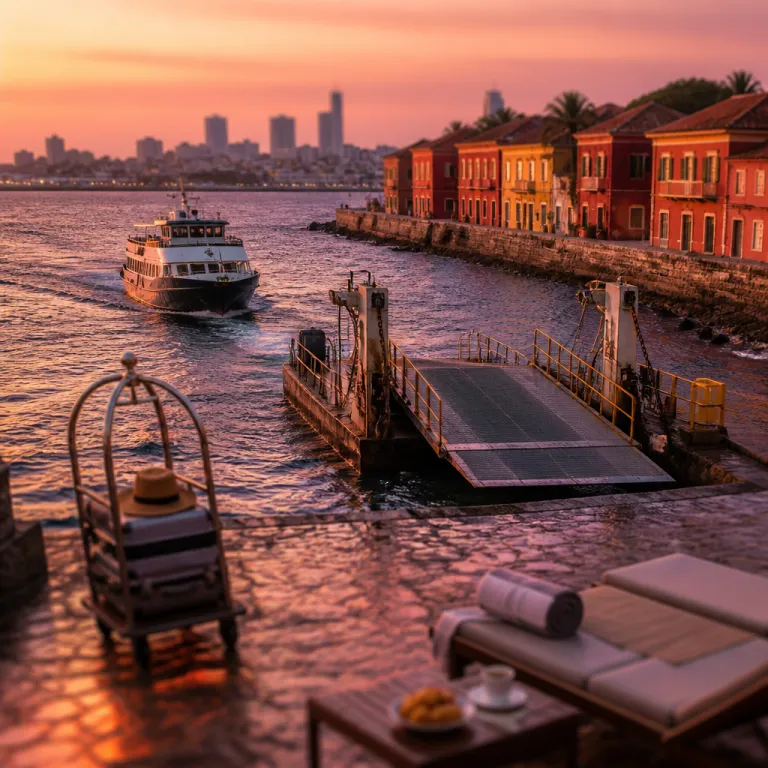
Luxury stays in Dakar for a meaningful Gorée Island journey
Staying in Dakar before visiting Gorée Island lets you balance comfort with reflection. A refined hotel in Dakar, Sénégal, gives you calm spaces to process the island’s difficult history of enslaved people and the Atlantic slave trade. Many visitors choose a premium base in Dakar so each day feels both enriching and emotionally manageable.
The Dakar–Gorée journey begins on the mainland, where the city’s luxury hotels frame the wider story of West Africa and its coastal trade routes. From a high-floor suite overlooking the port, you can trace the short 3.5 kilometre stretch of water that separates Dakar from the island, once crossed by ships carrying enslaved Africans toward the Atlantic slave routes. Choosing a hotel with concierge teams trained in heritage tourism ensures your trip to the UNESCO World Heritage site is handled with the respect such a historical place deserves.
For travellers focused on both comfort and context, central Dakar Sénégal addresses work well. Properties near the ferry terminal reduce transfer time, so your day trip to the island of Gorée feels seamless rather than rushed. Some luxury hotels in Dakar now curate private transfers to the ferry, help you buy tickets in advance for the historical museum on Gorée Island, and recommend certified guides who specialise in the history of enslaved Africans and the slave trade in island Sénégal.
Choosing the right district in Dakar for Gorée and other heritage sites
The district you choose in Dakar shapes how easily you reach Gorée Island and other historical landmarks. For travellers who want both business access and heritage, the Plateau area offers short drives to the ferry and to key colonial-era buildings that echo the island’s French past. From here, you can combine a Gorée Island tour with a later journey north to Saint-Louis, another island city that once anchored French trade in West Africa.
If you plan a longer trip through Sénégal, consider splitting your stay between Dakar and Saint-Louis for a deeper sense of African coastal history. A refined property near the Senegal River in Saint-Louis, such as those highlighted in this guide to refined stays amid river heritage and island light, complements a Dakar–Gorée itinerary with another UNESCO-listed island city. The contrast between Gorée Island’s compact 28 hectare site and Saint-Louis’s broader river island shows how different urban forms grew from similar trade and colonial pressures.
Travellers interested in the full arc of history often pair Gorée Island with visits to Dakar’s museums and archives. In Dakar Sénégal, institutions dedicated to African art and history help frame what you will later see in the slave house and the Maison des Esclaves on the island. This multi-city approach turns a single day trip into a layered tour of Senegal’s role in the Atlantic slave routes and the wider story of enslaved Africans in West Africa.
Planning the Dakar – Gorée ferry day trip in comfort
The ferry between Dakar and Île de Gorée is the essential link that turns your hotel stay into a living history experience. Regular ferries depart from the Dakar terminal, and the short crossing lets you watch the island grow clearer, with its pastel houses and historical fortifications that once guarded the slave trade routes. Booking a premium hotel close to the port means you can time your day trip to avoid the busiest departures and return to calm surroundings after visiting the slave house.
Many luxury concierges now treat the Dakar–Gorée crossing as a curated experience rather than a simple transfer. At properties such as Pullman Dakar Teranga, Radisson Blu Hotel, Dakar Sea Plaza or Terrou-Bi Resort, concierge teams can secure priority boarding on the ferry when available, arrange a private guide to meet you on Gorée Island, and schedule your visit to the House of Slaves museum during quieter periods of the day. This thoughtful pacing matters, because the history of enslaved Africans, the cramped house slaves quarters, and the stories of the Atlantic slave routes can be emotionally intense for many people.
Once on the island of Gorée, you move from the ferry dock through narrow streets lined with French colonial houses toward the Maison des Esclaves. After touring the historical museum and the slave house, many travellers appreciate a gentle transition back to daily life, which is why premium hotels in Dakar Sénégal often suggest a slow evening with ocean views or spa time. For those who wish to stay longer on the island, curated guides such as this resource on where to sleep, eat and watch the light change help you extend your stay while still returning to Dakar for further tours.
Understanding Gorée Island’s history before you go
Gorée Island is known for its role in the transatlantic slave trade. The island of Gorée, just off Dakar Sénégal, passed through Portuguese, Dutch, English and French control as European powers fought to dominate trade in West Africa. Between the fifteenth and nineteenth centuries, fortified slave houses and trading posts on island Sénégal became nodes in a system that moved enslaved Africans across the Atlantic slave routes.
Before your trip, it helps to understand how the House of Slaves and other buildings fit into this wider history. The Maison des Esclaves, often translated as the House of Slaves, stands as a symbolic site where people reflect on the suffering of slaves and the violence of the slave trade. Inside this historical museum, you see small rooms where house slaves were confined, stone staircases worn by chained feet, and the famous Door of No Return facing the Atlantic slave waters.
Context matters when you walk through these spaces, because Gorée Island was part of a broader network of European forts and trading posts along the coast of West Africa. Maritime transport, slave auctions and fortified posts linked Dakar, Gorée and other ports into a system designed for economic profit and territorial expansion. Knowing that partners included European traders and local intermediaries helps you read the island’s streets, houses and museums as evidence of both African resilience and deep cultural disruption.
How luxury hotels support respectful heritage tourism
Premium hotels in Dakar and on Île de Gorée increasingly see themselves as guardians of memory as well as hosts. Many properties train staff to explain the basics of Gorée Island’s history, from the arrival of the Portuguese to the later French rule that shaped the island’s architecture. This expertise helps guests prepare emotionally for visiting the slave house and the Maison des Esclaves, where the stories of enslaved Africans and the Atlantic slave trade are presented with stark clarity.
On a practical level, luxury hotels can arrange certified guides who specialise in heritage site interpretation. These guides, including local historians and members of associations such as the Association des Guides de Gorée, lead small group tours through the historical museum, the former slave trade warehouses and the island’s quiet residential lanes, ensuring that people understand both the documented facts and the ongoing debates about numbers and narratives. After such a tour, returning to a calm hotel environment allows you to process what you have seen, whether through a reflective evening by the pool or a quiet dinner overlooking Dakar’s harbour lights.
Some high-end properties in Dakar Sénégal also support cultural festivals and historical research linked to Gorée Island and other sites. By partnering with local historians, artists and community groups, they help ensure that tourism revenue benefits people connected to the island’s living culture, not only its past as a slave trade hub. When you choose a hotel that supports such initiatives, your Dakar–Gorée day trip becomes part of a broader effort to honour memory and sustain contemporary African creativity.
Designing a multi day heritage itinerary around Dakar and Gorée
A thoughtful itinerary around Dakar and Gorée Island turns a single day trip into a deeper engagement with Sénégal’s past and present. Start with two or three nights in a central luxury hotel, such as the urban resort highlighted in this guide to the Pullman Teranga Dakar and refined city stays. From there, plan your first full day around the ferry crossing, a guided tour of the Maison des Esclaves and the historical museum, and time to walk the island’s quiet backstreets.
On a second day, explore Dakar’s own historical sites, including colonial-era buildings that echo the French presence you saw on Île de Gorée. Visits to contemporary African art spaces and markets show how people in Dakar Sénégal live today, far removed from the era of slaves and slave trade, yet still shaped by that legacy. This balance between historical reflection and present-day culture keeps the trip from feeling one dimensional or overwhelming.
Travellers with more time can extend their journey beyond the Dakar–Gorée axis to other heritage site locations in Sénégal. A rail or road journey to Saint-Louis, or a coastal tour to smaller island communities, reveals how trade, migration and culture have long linked different parts of West Africa. By combining several days in Dakar with a carefully paced visit to Gorée Island and other historical towns, you create a trip that respects the weight of history while celebrating the resilience of African societies.
Key statistics for planning a Dakar – Gorée heritage stay
- Gorée Island covers about 28 hectares, according to UNESCO’s World Heritage Centre, which makes it compact enough to explore on foot in a single day while still offering multiple museums, historical houses and quiet residential streets.
- The distance between Dakar and Gorée Island is roughly 3.5 kilometres across the bay, a short ferry crossing that allows travellers staying in central Dakar hotels to plan flexible morning or afternoon departures.
- Gorée Island has been listed as a UNESCO World Heritage site since 1978, a designation that recognises its role in the transatlantic slave trade and helps channel resources into preservation and responsible tourism management.
- The island’s documented history as a slave trade hub spans roughly four centuries, from the arrival of the Portuguese in the fifteenth century through Dutch and English periods to French rule and the eventual abolition of the trade in the nineteenth century.
- Visitor numbers to Gorée Island have risen steadily with increased tourism in Sénégal, with local authorities reporting hundreds of thousands of arrivals per year, which has encouraged more luxury and premium hotels in Dakar to develop dedicated heritage packages and concierge services for the Dakar–Gorée route.
FAQ about Dakar, Gorée Island and luxury stays
What is Gorée Island known for ?
Gorée Island is known for its role in the transatlantic slave trade. The island’s Maison des Esclaves, or House of Slaves, and its historical museum present the stories of enslaved Africans who passed through this small island off Dakar Sénégal. Today it is a UNESCO World Heritage site and a major place of remembrance in West Africa.
How do you get to Gorée Island from Dakar ?
Regular ferries operate between Dakar and Gorée Island, departing from the central ferry terminal near the Plateau district. The crossing takes only a short time, and many luxury hotels in Dakar can arrange transfers and tickets as part of a curated day trip. Staying close to the port makes it easier to choose less crowded departure times.
Is Gorée Island a UNESCO World Heritage site ?
Yes, Gorée Island was designated a UNESCO World Heritage site in 1978. The listing recognises the island’s significance as a major centre of the Atlantic slave trade and as a symbol of the suffering of enslaved Africans. This status supports preservation work on the slave house, historical museum and other key buildings.
How many days should I spend in Dakar for a Gorée visit ?
Most travellers planning a Dakar–Gorée itinerary stay at least two or three nights in Dakar. One full day is usually dedicated to the ferry crossing and a guided tour of Gorée Island, including the Maison des Esclaves and other historical sites. Additional days allow time to enjoy Dakar’s luxury hotels, museums and contemporary African culture.
Are luxury hotels in Dakar suitable for heritage focused trips ?
High-end hotels in Dakar Sénégal are well suited to heritage focused trips, because many now offer concierge teams trained in cultural tourism. They can arrange certified guides, timed entries to busy sites and comfortable transfers to and from the ferry terminal. This support helps travellers engage deeply with Gorée Island’s history while returning each day to calm, restorative surroundings.