Three host zones, one surge in dakar 2026 youth olympics hotels demand
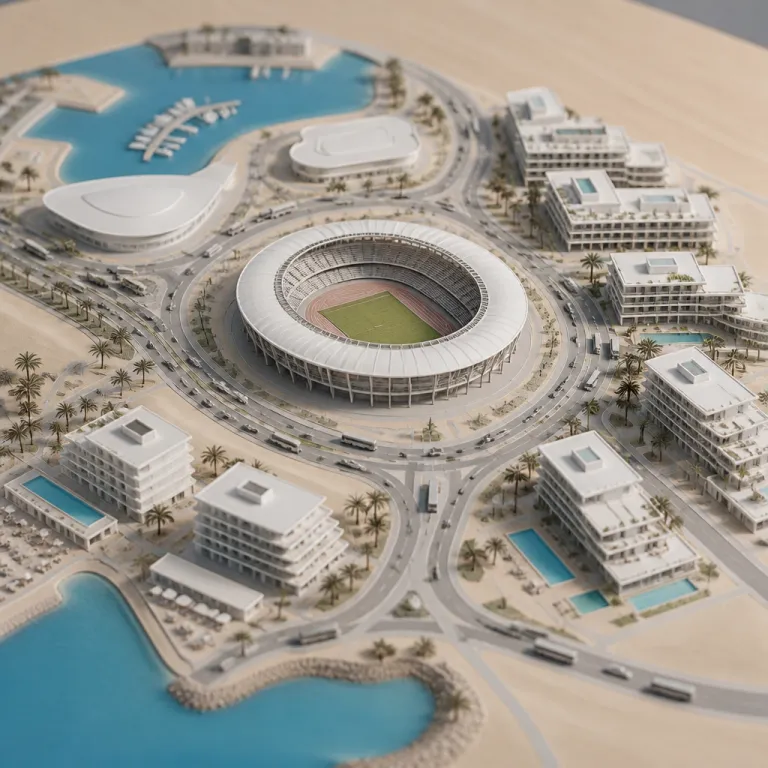
With Dakar’s Youth Olympic Games venues reported as 92 percent complete as of mid-2026, hotel demand for Dakar 2026 is already reshaping booking patterns across the Senegalese capital. According to progress updates shared by the Senegalese Ministry of Infrastructure and Youth Olympic Games organizing committee briefings, Iba Mar Diop Stadium is nearing final checks at around 98 percent completion, the Tour de l’Œuf urban sports complex stands close behind at 96 percent, and the new Olympic swimming pool is fully finished. As the first Olympic event in Africa prepares to welcome an estimated 2,700 to 3,000 young athletes and up to one million visitors, luxury hoteliers in Senegal are recalibrating rates, minimum stays, and room allocations. The way the Youth Olympic Games are distributed across three distinct zones will be decisive for travelers tracking how accommodation pressure in Dakar evolves in the run up to October and November.
The Dakar zone will host showcase sports events, ceremonies, and much of the international media activity, which means Almadies, Plateau, and Ngor will feel the sharpest pressure on premium inventory as the Olympic Games approach. In Diamniadio, where the Youth Olympic Village at Université Amadou Mahtar Mbow is reported at roughly 85 percent completion in internal host city reports, the focus is logistics rather than glamour, yet Four Points by Sheraton Dakar Diamniadio with its 173 rooms already anchors a cluster of business-friendly properties that will absorb delegations, technical staff, and official services. Down the coast, Saly and the Petite Côte will host selected competitions and training sessions, and this coastal zone will attract international guests who want resort-style stays while still remaining within reach of the Youth Olympic schedule and related events.
For high-end travelers, the pattern from previous Youth Olympic host cities is clear: hotel demand for Dakar 2026 will tighten first in neighborhoods closest to opening and closing ceremonies, then in areas favored by media crews and sponsors. In Dakar, that means early pressure on sea-facing addresses in Almadies and Ngor, followed by Plateau where official events and hospitality suites will cluster around ministries and corporate headquarters. The Ministry of Infrastructure’s statement that “venues completion rate is 92% as of July 2026,” echoed in host contract monitoring summaries, has become a planning benchmark for hotel revenue managers, who are already blocking inventory for Olympic Games related events while leaving a limited pool of rooms for independent guests and late corporate bookings.
Where and when prices will spike for luxury stays
For executives blending business and leisure, the most acute phase of hotel demand for Dakar 2026 will run from the venue handover deadline on July 31 through the closing ceremony in mid November. In that window, Almadies will lead price increases, driven by its concentration of embassies, media offices, and high-end restaurants, while Ngor’s shoreline properties will follow as international broadcasters and Olympic Games sponsors lock in long stays. Plateau, with its proximity to official ministries and corporate headquarters, will see more measured but still significant rate growth, especially in properties that can guarantee fast web connectivity, reliable digital services, and discreet meeting rooms for clients who need to work around sports events.
Booking patterns from other Youth Olympic host cities suggest that the tightest availability will appear about six to nine months before the event, when national Olympic committees finalize their travel blocks and confirm athlete support teams. In Dakar, that means travelers who want quality rooms with Atlantic views should treat the period from late October to early November as peak season and plan accordingly, using flexible cancellation policies where provided and maintaining direct contact with hotel sales teams. Guidance on July booking strategies in Senegal, including how to combine early reservations with adaptable dates, applies even more strongly when Youth Olympic demand intersects with corporate travel, regional conferences, and parallel sports events.
Travelers who prioritize calm over proximity to the main Olympic stadiums should look at high-quality properties slightly removed from the core sports venues, while still staying within 20 to 30 minutes of key sites. In Dakar, that might mean a refined oceanfront address near the port, such as the Ibis facing the Atlantic, which is often highlighted in detailed reviews of elegant stays at Ibis Dakar for its consistent service and practical location. These hotels will still feel the uplift from Youth Olympic related events and media traffic, but their pricing curves are likely to be less volatile than the flagship addresses in Almadies and Ngor, where every extra suite can be sold to international athletes’ entourages, official delegations, or senior Olympic Games organizers.
After the flame : the legacy of dakar 2026 youth olympics hotels demand
The deeper question for Senegal’s luxury segment is what happens to hotel demand for Dakar 2026 once the last medal ceremony ends and the Olympic flame leaves Dakar. The host contract budget of roughly 35.97 billion CFA francs, combined with more than 604 billion CFA in broader Olympic-adjacent spending reported in national planning documents, is not just about two weeks of sports; it is about creating a permanent floor of demand anchored in new infrastructure, better roads, and upgraded services. When the Youth Olympic Village in Diamniadio transitions from housing young athletes to serving as a long-term campus asset, the surrounding hotels will pivot from event-focused stays to a mix of conference traffic, regional business meetings, and academic visitors who continue to rely on the same international standard facilities.
Comparisons with previous Youth Olympic host cities suggest that while headline rates soften after October and November, occupancy often remains structurally higher than before the event, especially in properties that maintain strong international contact networks and curated content for sports tourism. In Senegal, the three-zone model — Dakar as showcase, Diamniadio as logistics hub, Saly as coastal retreat — should keep different streams of events flowing through the calendar, from regional sports tournaments to corporate retreats that want to leverage Olympic-quality facilities. For investors, that means the Dakar 2026 spike in luxury accommodation is likely to settle into a new baseline rather than collapsing, particularly for hotels that align their web presence, multilingual resources, and on-the-ground services with the expectations of international guests and repeat visitors.
New coastal developments on the Petite Côte, such as the five-star Palmera project at Pointe Sarène funded entirely by Senegalese capital, illustrate how Olympic Games momentum is accelerating high-end supply beyond Dakar itself. Detailed reporting on Pointe Sarène’s Palmera opening in developer communications shows how investors are betting that Youth Olympic visibility will translate into long-term international interest in Senegal’s shoreline and sports infrastructure. For travelers planning stays after the event, this means a broader choice of quality rooms and suites, where the legacy of the Youth Olympic competition is felt not only in the stadiums but in the quiet efficiency of check-in, the upgraded fitness rooms, and the confident teranga that now speaks fluently to a global audience of sports fans, executives, and leisure guests.